The Nocturnal Recovery Window
Why a spoonful of pure peanut butter before bed is a tactical move for muscle preservation.
The Hours You're Wasting
Eat peanut butter before bed and half the internet will tell you you're sabotaging your physique. Carbs at night, fat while you sleep — the old fears die hard.
They're wrong, and the timing is the reason.
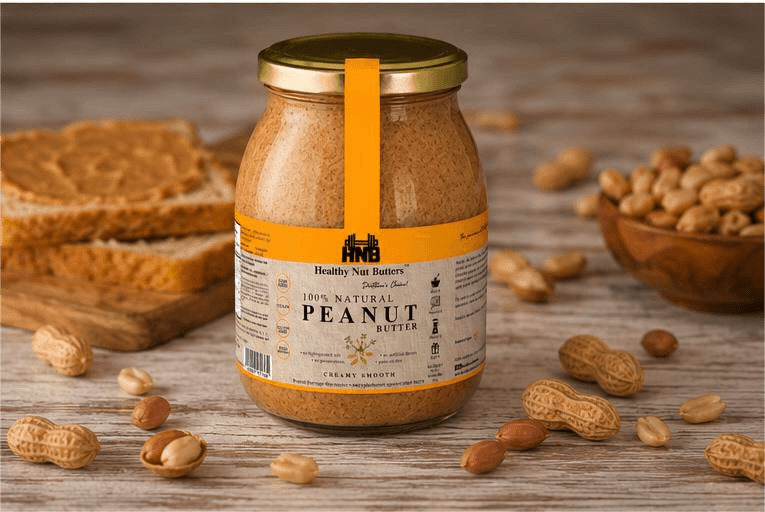
Peanut butter before bed is a slow-digesting, fat-dense snack — about 8 g of protein and 16 g of fat per two tablespoons — whose value at night is sustained release, not raw protein. While you sleep, the body shifts into repair, and its limiting factor is a steady trickle of fuel across the longest fast of the day.
That trickle is what most people sleep straight through. It's exactly where a small, deliberate pre-sleep ritual earns its place.
The Myth That Costs You Muscle
The villain here isn't a food. It's a slogan: nothing after 8 p.m.
Repeated for decades, that rule treats every late-night calorie as fat in waiting. But the science on overnight recovery says the opposite for anyone training hard — going to bed under-fuelled leaves the repair window starved.
The real mistake is what most people reach for. Cereal or a sugary snack spikes blood sugar, then drops it, fracturing the very sleep recovery depends on. (We've covered how peanut butter keeps blood sugar steady elsewhere.)
So the question was never whether to eat before bed. It's what — something slow, stable, and quietly anabolic.
Peanut Butter Before Bed: What Recovery Science Says
The research on overnight recovery is unusually clear. Protein ingested before sleep raises overnight muscle protein synthesis and, over weeks of training, supports greater gains in mass and strength — provided the dose is high enough, with reviews pointing to roughly 40 g of slow-digesting protein for a robust effect (Trommelen & van Loon, NCBI).
Here's the honest part: a spoonful of peanut butter before bed is not that 40 grams. Two tablespoons carry about 8 grams of incomplete protein — useful, but not an overnight switch on its own.
Its job is different, and it's real. Peanut butter is fat-dense and slow to digest, so added to a proper pre-sleep protein source — Greek yoghurt, cottage cheese, a casein shake — it slows gastric emptying and extends the trickle of amino acids across the night.
It also brings magnesium — about 12% of the daily value in two tablespoons (USDA) — a mineral associated with sleep quality and muscle relaxation. And because it barely moves blood sugar, it won't shatter your sleep the way a sweet snack will.
How to Build the Window
Treat peanut butter as the finishing layer, not the foundation.
- Anchor with 30–40 g of slow protein: Greek yoghurt, cottage cheese, or a casein shake — the dose the research rewards.
- Fold in a spoonful of pure peanut butter: for slow-release fats, magnesium, and staying power.
- Time it ~30–60 minutes before sleep, in a moderate portion, so digestion doesn't disturb rest.
For the muscle-minded, peanut butter belongs with the high-protein nut butters made for exactly this kind of fuelling.
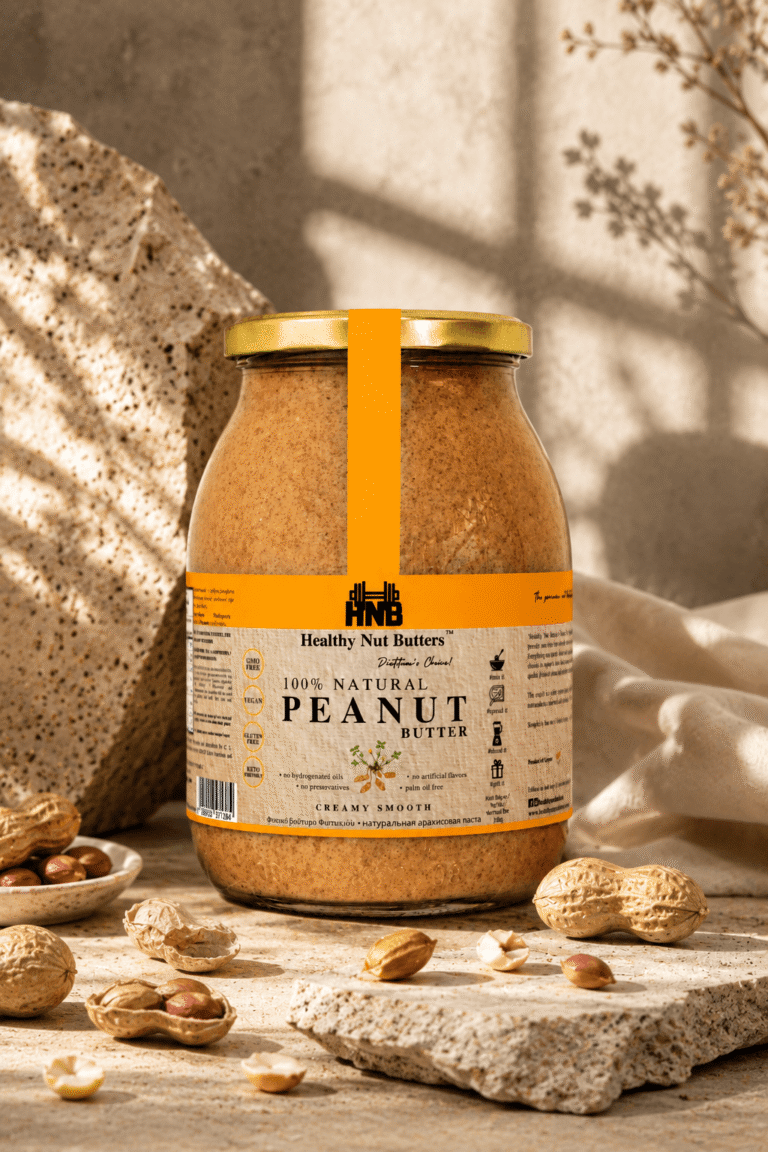
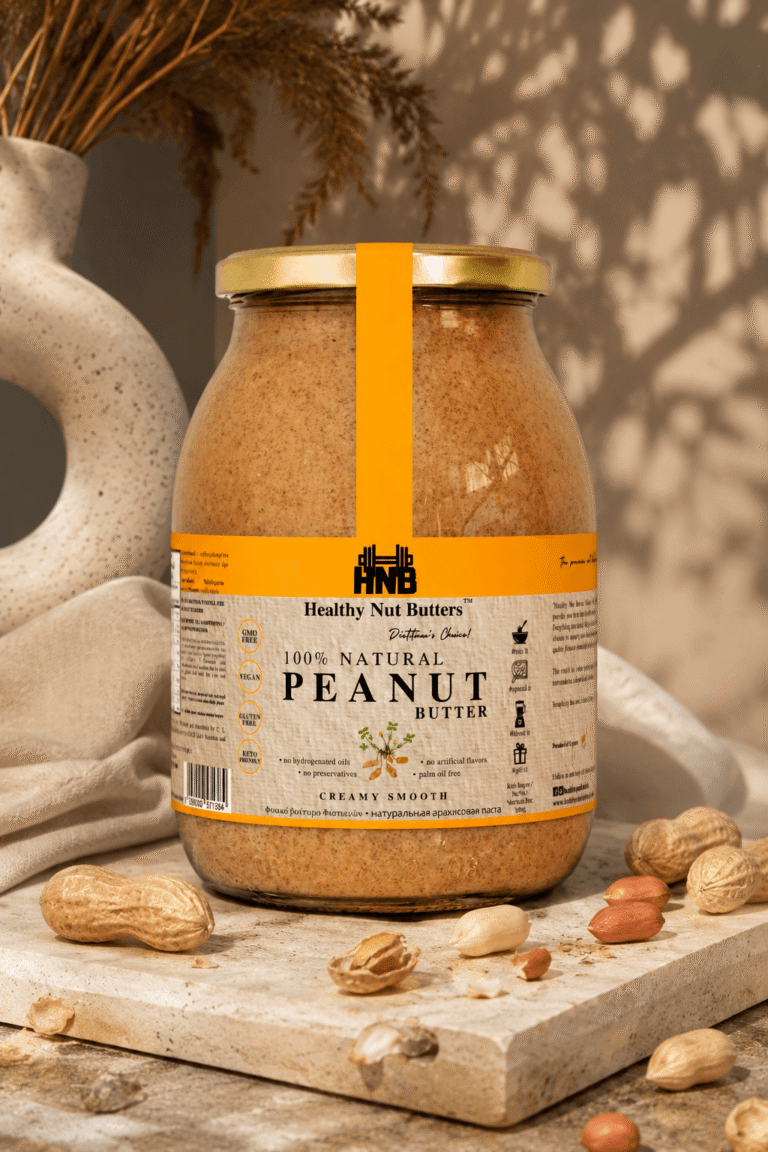
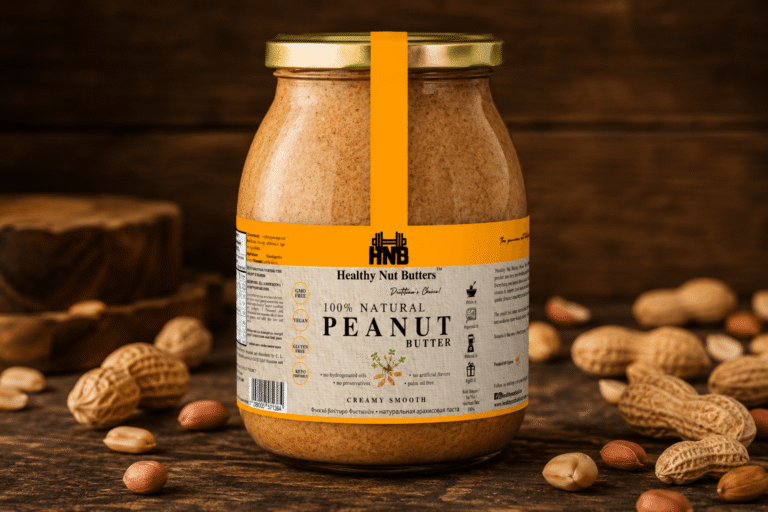
And purity decides whether it helps or hurts. A spread cut with sugar and hydrogenated oil reintroduces the exact blood-sugar spike you're trying to avoid. After screening label after label, our Editor's Choice for absolute purity remains HNB 100% Classic Peanut Butter — peanuts, nothing else.
The Takeaway
Peanut butter before bed won't build your physique while you sleep — no single spoonful does. But paired with a real pre-sleep protein and eaten with intent, it turns the longest fast of your day into a steady, low-glycaemic recovery window instead of a wasted one.
Skip the myth. Keep the ritual slow, simple and pure. (For the bigger picture on the spread as a daily habit, see the case for a daily spoonful. For the full muscle breakdown, see The Anabolic Density of Peanut Butter)
JOIN THE READING CLUB
Get new articles, recipes, and member-only offers - straight to your inbox.