The Anabolic Density of Peanut Butter
Peanut Butter and Muscle Growth: a clinical breakdown of macros, mechanics, and muscle protein synthesis.
The Two Wrong Answers
Ask about peanut butter for muscle and you'll get one of two wrong answers. The first: it's a protein food — eat it, grow. The second: it's a calorie bomb — avoid it, stay lean.
Both miss what's actually on the spoon.
Peanut butter is a calorie-dense whole food — roughly 190 calories per two tablespoons, 590 per 100 grams (USDA) — carrying real protein, micronutrients and fat inside an intact whole-food matrix. But its value to a muscle-building diet has almost nothing to do with the metric everyone fixates on.
The gym counts grams of protein. The body builds muscle from a far more complicated equation. Get that equation right and peanut butter earns a permanent place in it — just not the place the bro-science assigned.
The Tyranny of the Protein Column
Here's the villain: a culture that reads every food through one column on the label — protein — and judges it worthy or worthless on that number alone.
By that logic peanut butter looks mediocre. Eight grams per serving, and an incomplete protein at that — limited in methionine, PDCAAS near 0.52 against 1.0 for whey or egg (Frontiers in Nutrition).
So the reductionists shelve it. And they're wrong — because muscle isn't built by protein in isolation. It's built by a surplus of quality energy, a steady amino-acid supply, the micronutrients that run hormonal and recovery machinery, and the discipline to eat enough, consistently, for months.
Protein is one input. Peanut butter quietly serves the rest.
Peanut Butter for Muscle: What the Science Actually Rewards
Strip away the marketing and the real case for peanut butter for muscle emerges across four mechanisms.
| 2 tbsp (32 g) | 100 g | |
|---|---|---|
| Calories | ~190 | ~590 |
| Protein | ~8 g | ~25 g |
| Fat (mostly monounsaturated) | ~16 g | ~50 g |
| Carbohydrate (incl. fibre) | ~7 g | ~20 g |
| Magnesium | ~12% DV | ~40% DV |
1. The protein is a passenger, not the driver. Muscle protein synthesis is triggered largely by leucine, and research associates ~2.5–3 g per meal with maximal stimulation (American Journal of Clinical Nutrition). Two tablespoons supply about half a gram — useful within a mixed meal, never an anabolic signal alone.
2. The whole-food matrix matters. In a controlled trial, whole eggs drove ~40% greater post-exercise muscle protein synthesis than the same protein from egg whites — the intact matrix, not just the amino acids, did the work (AJCN, 2017). Peanut butter is exactly that kind of matrix.
3. Density is a feature, not a flaw. For anyone trying to grow, the bottleneck is rarely protein — it's getting enough quality calories down. At ~590 per 100 g, peanut butter solves that more pleasantly than almost anything on the shelf.
4. The micronutrients run the background machinery. Magnesium, niacin and vitamin E support recovery and energy metabolism — and, alongside adequate dietary fat, the hormonal baseline muscle growth depends on.
The Five Facets of the Spoonful
Each mechanism opens into its own question — and we've answered them in depth:
- Is it even a protein? The macro split settles the protein-or-carb debate for good → Is Peanut Butter a Protein or a Carb?
- Should it replace your powder? When to reach for the scoop, when for the jar → Peanut Butter vs. Protein Powder
- Does timing matter? The overnight recovery window → The Nocturnal Recovery Window
- How much is too much? Why 100 g a day is an asset in a surplus and a mistake outside one → Bulking vs. Bleeding Calories
- What about hormones? The honest link between dietary fat, minerals and testosterone → The Endocrine Ally
Together they describe a single food doing five quiet jobs at once — which is why it anchors the high-protein nut butters range.
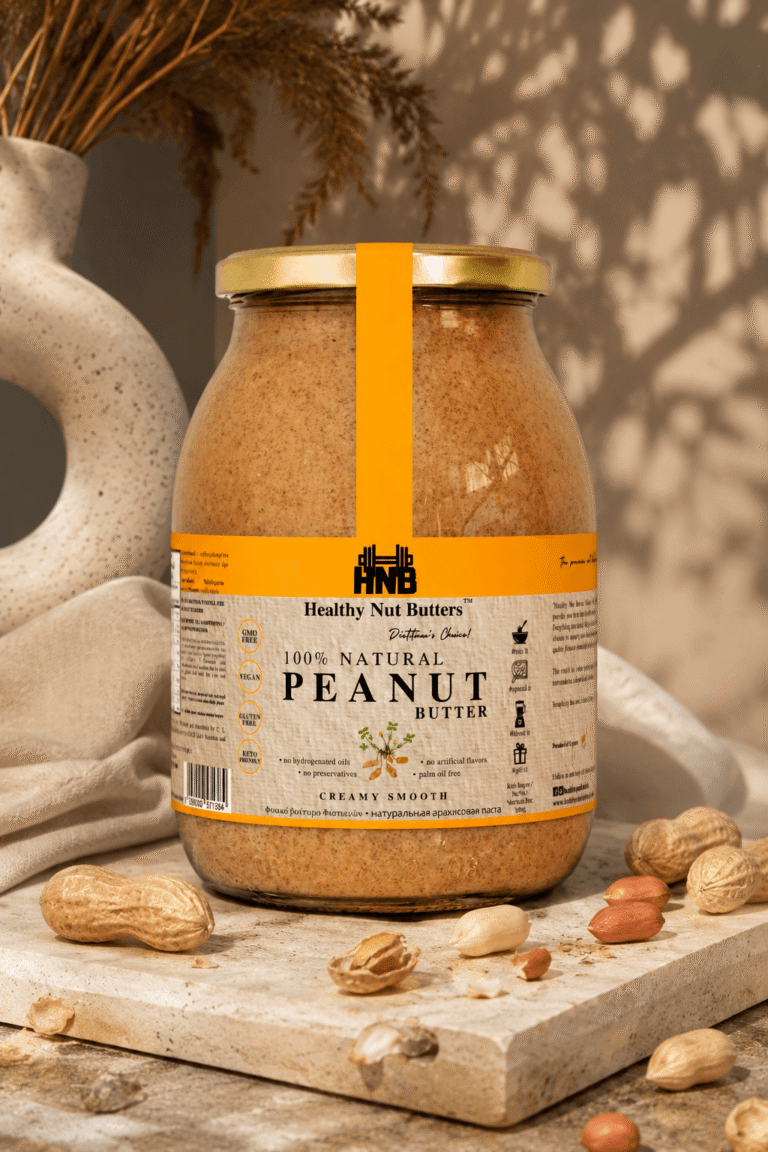
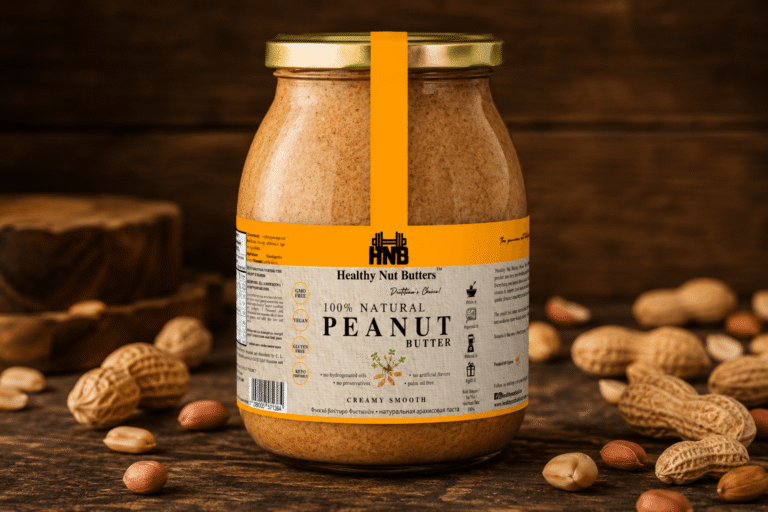
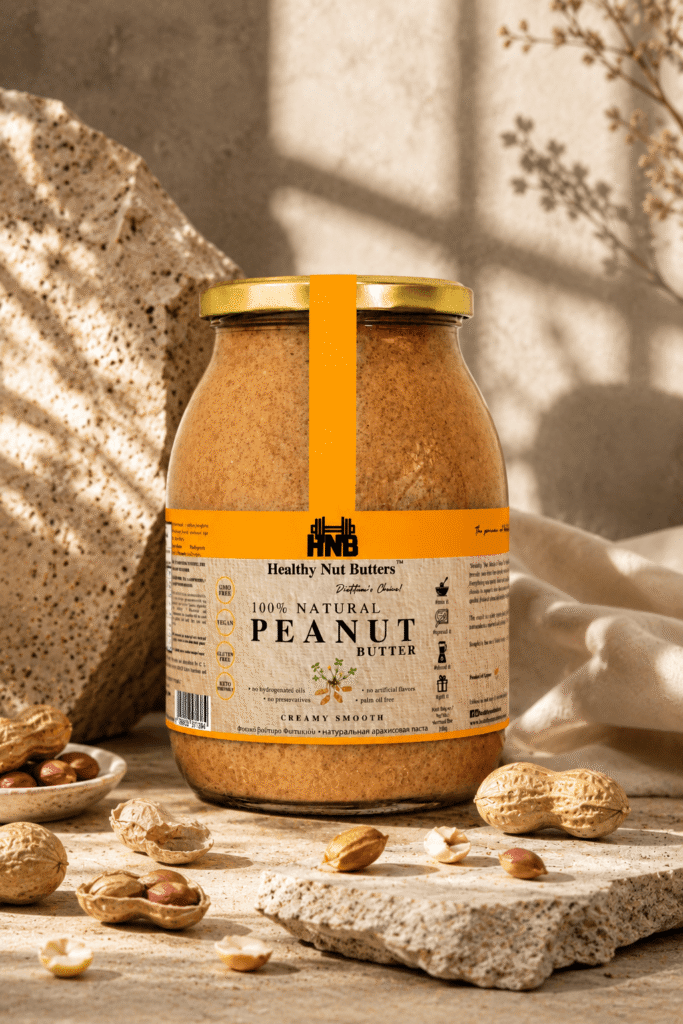
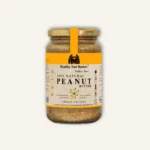
And every one of them collapses if the jar isn't clean. A spread cut with sugar and hydrogenated oil distorts the macros, spikes blood sugar, and works against the metabolic health the whole system relies on. After screening label after label, our Editor's Choice for absolute purity remains HNB 100% Classic Peanut Butter — peanuts, nothing else.
The Closing Thesis
Peanut butter doesn't build muscle the way the gym imagines — it was never a protein source, and it never needed to be. It builds the conditions muscle requires: a dense, palatable surplus of quality calories; a whole-food matrix the body uses better than any isolate; the magnesium, vitamin E and fat that keep recovery and hormones running in the background.
Judge it by the protein column and you'll underrate it forever. Judge it by what it does across a month of hard training and honest eating, and the anabolic density of a single spoonful speaks for itself. (For the wider case on the spread beyond the gym, start with is peanut butter healthy.)
JOIN THE READING CLUB
Get new articles, recipes, and member-only offers - straight to your inbox.