The Spread Cardiology Quietly Respects
How a single, unadulterated jar can rewrite your metabolism — one velvet spoonful at a time.
A Quiet Reckoning With an Everyday Indulgence
For decades, peanut butter lived a double life: beloved at the breakfast table, quietly distrusted by the wellness elite. It was filed away beside the things one was meant to outgrow — too rich, too dense, too generous to be virtuous. That instinct was never wrong about the imitations. It was simply wrong about the original.
Stripped to its truest form — roasted peanuts and nothing else — peanut butter is not an indulgence to be rationed but a nutrient-dense whole food with a remarkable clinical résumé. The modern question is no longer whether to keep it in the pantry, but which jar earns a place there. In an era where longevity is the ultimate luxury, the discerning palate has stopped asking for less. It has started asking for pure.
The Problem Hiding in Plain Sight
Here is the uncomfortable truth the label rarely volunteers: most jars on the shelf are not peanut butter. They are peanut products — engineered for shelf stability, mouthfeel, and margin, not for the body that consumes them.
The industrial shortcuts are predictable once you know to look for them. Hydrogenated and palm oils are folded in to stop the natural oil from separating, trading a moment of convenience for a fat profile your arteries never asked for. Added sugars — sometimes two or three forms in a single jar — quietly convert a savory, blood-sugar-friendly food into a dessert that spikes insulin. And a quiet roster of emulsifiers and stabilizers smooths the texture while adding nothing your metabolism can use.
The cost is not dramatic. It is cumulative. Each spoonful of the compromised version asks your system to process what it was never designed to, day after silent day. The luxury, it turns out, was never in the additives. It was in their absence.
The Science of a Single Ingredient
When peanut butter is left intact, what remains is one of the more quietly accomplished foods in nutritional science — a near-equal balance of plant protein and predominantly unsaturated fat, the kind clinical literature consistently associates with metabolic and cardiovascular benefit.
The evidence is neither fringe nor new. In the landmark Nurses' Health Study, women who consumed peanut butter and nuts five or more times per week showed a markedly lower risk of developing type 2 diabetes — an association the authors attributed to the unsaturated fats and micronutrients that support glucose and insulin homeostasis (JAMA, 2002). Larger pooled cohort analyses have since reinforced the pattern for the heart: regular consumption of peanuts and tree nuts has been linked to a meaningful reduction in total cardiovascular disease and coronary heart disease (Journal of the American College of Cardiology, 2017). Even among higher-risk populations, frequent nut and peanut-butter intake has been associated with a more favorable lipid profile — lower LDL and total cholesterol (Diabetes Care, 2009).
A note worthy of any responsible editorial: these are associations drawn from observational and clinical research, not promises. But the consistency across populations is what gives them weight. (Each of these threads rewards a closer look. We follow the glucose story in detail in [peanut butter and blood sugar], trace the cardiovascular evidence in [peanut butter heart health], and weigh the spread against its closest rival in [peanut butter vs almond butter])
What a Pure Spoonful Actually Delivers
Approximate values per 2 tablespoons (32 g) of 100% roasted peanuts, no additives.
| Nutrient | Amount | Why It Matters |
|---|---|---|
| Energy | ~190 kcal | Dense, satiating fuel — slow to burn, slow to crash |
| Plant Protein | ~8 g | Supports lean tissue and prolonged satiety |
| Total Fat | ~16 g | Predominantly monounsaturated — the heart-favorable kind |
| Saturated Fat | ~3 g | Naturally modest in the unadulterated form |
| Carbohydrate | ~7 g | Low glycemic load; minimal insulin disruption |
| Dietary Fiber | ~2–3 g | Feeds the gut microbiome, blunts glucose response |
| Vitamin E | ~3 mg | A lipid-soluble antioxidant guarding cell membranes |
| Magnesium | ~54 mg | Cofactor in glucose metabolism and nerve function |
| Niacin & Folate | present | Support energy metabolism and cellular repair |
The architecture is elegant: protein and fiber temper the glucose curve, unsaturated fat carries the cardiovascular benefit, and the micronutrient matrix quietly underwrites the whole. None of it survives intact once sugar and hydrogenated oil are introduced.
The Art of Keeping It Pure
Translating the science into a daily ritual requires almost nothing — and that is precisely its sophistication. A spoonful folded into morning oats (and if you're curious what the cumulative payoff looks like, we trace the effects of [eating peanut butter every day]) steadies blood sugar through the late morning. A measured tablespoon alongside fruit transforms a glucose spike into a slow release. Stirred into a savory sauce, it lends depth without a single gram of refined sugar.
The discipline lives entirely in the sourcing. The ingredient list should read like a single sentence: peanuts. Perhaps a whisper of salt. Nothing that ends in -ate, no oil that wasn't pressed from the nut itself, no sweetener masquerading as flavor. (If you want the full anatomy of what gets added and why it matters, we take it apart in [natural vs commercial peanut butter].)
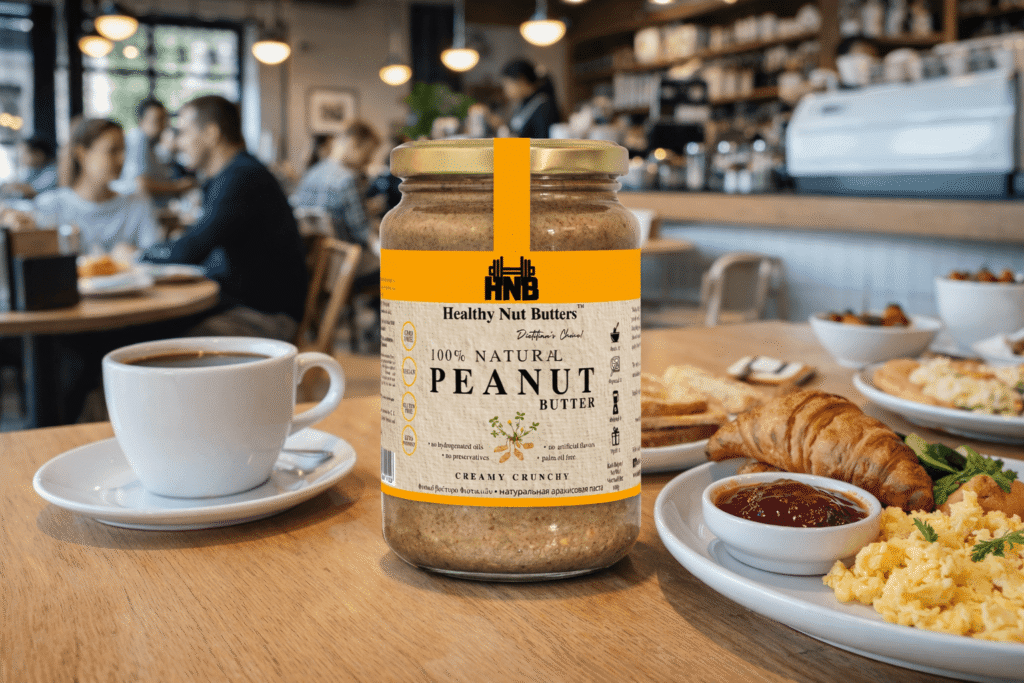
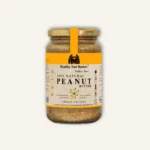
This is the work our editorial team does before a single jar earns a recommendation. Having screened hundreds of market labels for hidden palm oil, added sugars, and stabilizing agents, our Editor's Choice for Absolute Purity is the HNB 100% Classic — selected not for its packaging or its marketing, but for what it omits. One ingredient. Nothing borrowed, nothing added. It is, simply, what peanut butter was always meant to be.
The Closing Thesis
The Takeaway: The rehabilitation of peanut butter is not a trend; it is a correction. The food was never the problem — the editing was. When you remove the sugar, the hydrogenated oil, and the emulsifiers, what remains is a dense, intelligent, clinically respected whole food that asks your metabolism for very little and gives it a great deal. To choose the pure jar over the engineered one is not deprivation. It is the quiet, deliberate luxury of giving your body only what it can actually use — and trusting that, in nutrition as in everything refined, less truly is more.
JOIN THE READING CLUB
Get new articles, recipes, and member-only offers - straight to your inbox.