The Velvet Fuel the Microbiome Welcomes
You feed 38 trillion tenants every day. Most spreads charge them rent. The right one pays them.
Thirty-Eight Trillion Reasons to Care
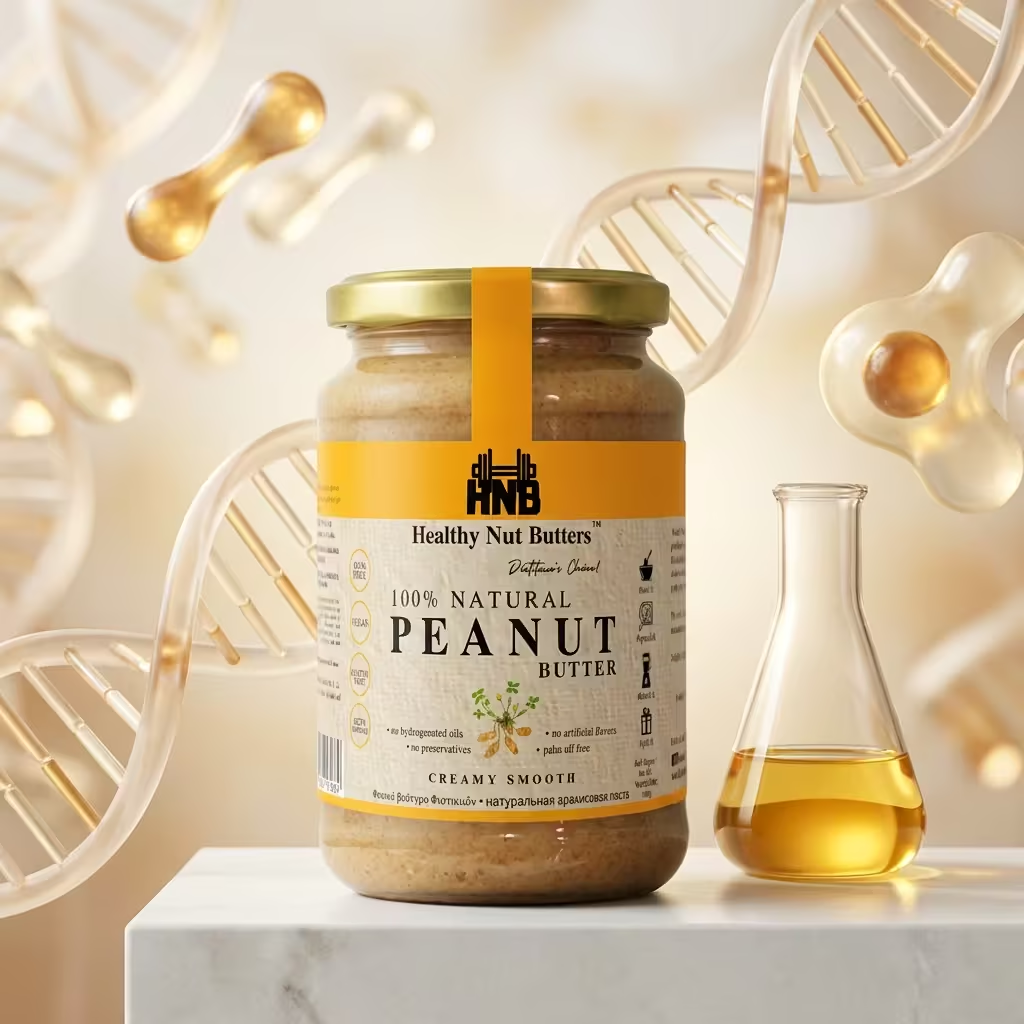
You're carrying around 38 trillion bacteria, and right now most of them are hungry (PLOS Biology, 2016). Feed them well and they pay you back — in steadier digestion, calmer inflammation, a sturdier gut wall. Starve or irritate them, and the bill arrives later.
This is the part of the peanut butter and gut health story almost nobody tells you. It doesn't begin with the nut. It begins with what's been done to it.
Because a real peanut — roasted, ground, left alone — is gut food. It carries fiber and plant polyphenols that the bacteria in your colon actually want. The trouble starts when the food industry "improves" it.
The Problem Isn't the Peanut. It's the Additive.
Pick up a glossy commercial jar and read past "peanut butter." You'll often find emulsifiers — carboxymethylcellulose, polysorbate-80 — added so the oil never separates and the texture stays uniformly perfect.
Here's what those do downstream. In a landmark study, mice fed these two common emulsifiers developed thinner gut mucus, bacteria creeping closer to the intestinal wall, low-grade inflammation, and metabolic syndrome (Nature, 2015). A later controlled human trial found carboxymethylcellulose alone measurably disturbed the gut microbiota and its metabolites (Gastroenterology, 2022).
Eat that once, and it's nothing. Eat it on your toast every morning, and you've turned a daily habit into a daily irritation. The smooth texture was never free.
Where Peanut Butter and Gut Health Actually Meet
Strip the additives away and the picture flips entirely. The connection between peanut butter and gut health runs through one simple currency: fiber.
Your colon bacteria ferment dietary fiber into short-chain fatty acids — chiefly butyrate, the preferred fuel of the cells lining your gut. More fiber means more of that fuel, a better-fed microbiome, and a stronger barrier. A two-tablespoon serving of real peanut butter brings 2–3 grams of it, plus polyphenols like p-coumaric acid that add to the mix.
So the comparison isn't subtle:
| A pure jar | An emulsifier-heavy jar | |
|---|---|---|
| Fiber | Feeds beneficial bacteria | Same fiber — undercut by additives |
| Polyphenols | Intact, gut-friendly | Intact, but not the point |
| Emulsifiers | None | Thin the mucus, irritate the lining |
| Net effect on the gut | Nourishing | Working against you |
Same nut. Opposite outcome. The deciding factor is the ingredient list, not the marketing on the front.
How to Eat for the Bugs That Keep You Well
The move is almost insultingly simple: choose a jar your bacteria would choose. One ingredient — peanuts — maybe a pinch of salt. Nothing engineered in to keep the oil from rising. (If a layer of oil on top bothers you, good. That's the look of a spread no emulsifier ever touched.)
A spoonful in oats, on whole-grain toast, blended into a shake — a couple of times a day is plenty. We break down exactly which additives to hunt for on a label in natural vs commercial peanut butter, and the wider case sits in our pillar on whether peanut butter is healthy.
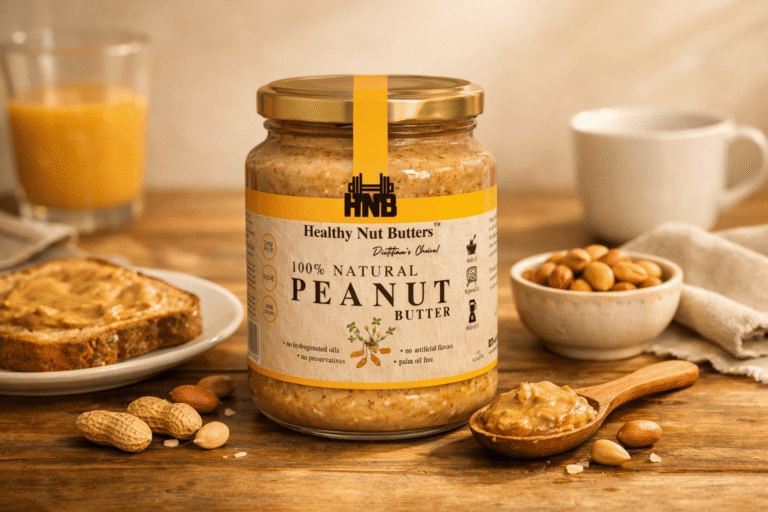
This is the screen our editorial team runs before anything earns a recommendation — which is why the pick here is the HNB 100% Classic Peanut Butter: peanuts, full stop. A jar your microbiome would actually thank you for.
The Closing Thesis
The Takeaway: Gut health isn't built by a supplement you remember to take twice a week. It's built — or quietly eroded — by what you eat every single day, and by what's hiding in it. A clean, single-ingredient peanut butter feeds the 38 trillion organisms that keep you running. An emulsifier-loaded one feeds them something they were never meant to process. Same spoon, same morning. The only variable that matters is the jar you reached for.
JOIN THE READING CLUB
Get new articles, recipes, and member-only offers - straight to your inbox.